“When you stop expecting people to be perfect, you can like them for who they are” – Donald Miller
Often at work, we try to stand out or fit in by acting in ways that we consider right to get us where we want to go. Sometimes we complain about the boss who’s too demanding or that colleague who talks too much; we regret that one meeting we wanted to share our opinion and couldn’t …or perhaps talked too much when we shouldn’t.
I’m here to make you feel better and tell you that you are not alone and the way you deal with things says a lot about your personality type. Are you an extrovert or an introvert? Are you a feeler or a thinker?
Getting to know your teammates, will help you predict how they behave and / or adjust your style to make work relationships better. Predictions are a key factor in our decision making. Whether you decide to make a career shift or purchase a new car, your choice is usually based on the prediction that the selection you made will be more beneficial than others you have considered. Likewise, when you decide to act (or react) in a certain way, it predicts your approach or preference to dealing with situations and other people.
Talking about preferences, have a go at understanding these types. Read the statements below and choose the ones that describe you the most. These are preferences, choices / options you like more; not labels, not stickers; you may identify that you like options from both categories, however pick the one that describes you best; you will find that with some you will agree strongly, while with others just a little and with some not at all. Pick a letter from each category and the end you should have your own 4 letter type. *
Extraversion / Introversion (E – I)
E – You enjoy going to meetings and you tend to share your thoughts in different situations. As a matter of fact, you feel frustrated if when your voice is not heard.
– You may lose your trail of thought: “what was I saying?… oh yeah, about the event I attended yesterday … Errm… Got it! Mary got a promotion!”
– You recharge by being in a group; Being with people gives you energy and a “feel good” state; being alone feels wrong, empty or boring.
I – You like to share special occasions with just one other person or perhaps a few very close friends.
– You wish you could get your ideas out more frequently; at times you may regret not stating your opinion out loud
– You recharge by being alone, reading a book, at home, is your “favourite time of the day”; large gatherings drain your energy, they’re exhausting.
Sensor / iNtuitive (S – N)
S – You prefer exact or specific answers to specific questions: when you ask “What time will you be there?”, around 2 is not the answer you want to hear. 2:20 is your preferred answer. And your friend better be there at 2.20!
– Daydreaming and fairy-tale talk are things you condemn. You find it hard to understand people who indulge on fantasies.
– You love facts and figures more than ideas and theories.
N – You tend to give general answers to questions and you get irritated if people want specifics.
– You would rather imagine how you’d spend your next salary than figure out the accounting of your last one.
– You believe that time is relative; you’re not late unless the event / dinner / party started without you. And even then… you made it, right? Why are they so bitter about it!?
Thinker / Feeler (T – F)
T – You manage to stay calm and objective in situations when everyone else is losing it.
– You don’t mind making difficult choices and you don’t understand why people are upset about things that are not relevant to the issue at hand.
– You don’t think it’s necessary to like people in order to work with them. Being right is better than being liked.
F – You consider everyone when you make a decision and you try your best to please them all.
– You put yourself in other people’s shoes: “What will he do if I fire him”? “How will my decision affect my team?”
– You find yourself wondering if others consider your feelings. “Does anyone care about what I want”?
Judger / Perceiver (J – P)
J – You ‘know’ that the world would be a better place if everyone will do what they are supposed to do, when they are supposed to do it.
– You don’t like surprise and this is not a surprise for anyone who knows you.
– You thrive on order; you have a special place where you keep your keys, everything on your desks is following a system; you have a system for anything, really
P – You don’t plan a task, you wait and see what it demands. People accuse you of being disorganised, but you know better.
– You don’t believe that order counts (although you do like it); you believe in creativity, spontaneity and responsiveness.
– You depend on last-minute energy rush to meet the deadlines. Don’t get me wrong, you make it to the deadline, but you may drive everyone else mad in the process.
Imagine an ordinary conversation between a sensor (S) and an iNtuitive (N):
S – What’s the time?
N– It’s late.
S – Seriously, what time is it?
N– It’s time to go.
S– (getting frustrated) I asked a simple. specific. question. Why is it so hard to give a simple, specific answer?
N – (moralizing) Relax, not everything in life is serious! Stop being so particular about small things.
I can already see some people taking sides, and that’s an insignificant chat scenario between friends; I cannot emphasize how important “a small detail” could be for your colleague or for your employee. Remember, Sensors are direct, realistic, factual and iNtuitives are inspirational, general, fantasy lovers; conversations like the one above will drive them both crazy in no time.
Question is: who’s right and who’s wrong? Both. None. Being an Introvert or an Extravert, a Thinker or a Feeler is not a matter of doing the right thing or not, it’s a matter of a “preferred way” to reach the (same) conclusion.
To understand this better, let’s look at how a T boss and an F boss would handle a situation of an employee being late when everyone should abide by the strict schedule of 0900 am to 0500 pm.
T boss: Susie, I noticed you were 30 minutes late today. This is a violation of our policy and you know it well. In all fairness, you must understand that this breach will not be tolerated and please consider this a verbal warning.
F boss: Susie, I noticed you were half an hour late today…I know you have a hard time taking care of your family; is this the reason behind your tardiness? We need you here on time, so let me know what can we do to help you so we can avoid being short of staff in the morning. By the way, how is your father feeling?
Thinkers are objective and ensure fairness by enforcing and maintaining rules while Feelers are subjective and ensure fairness by taking into account all personal matters and needs.
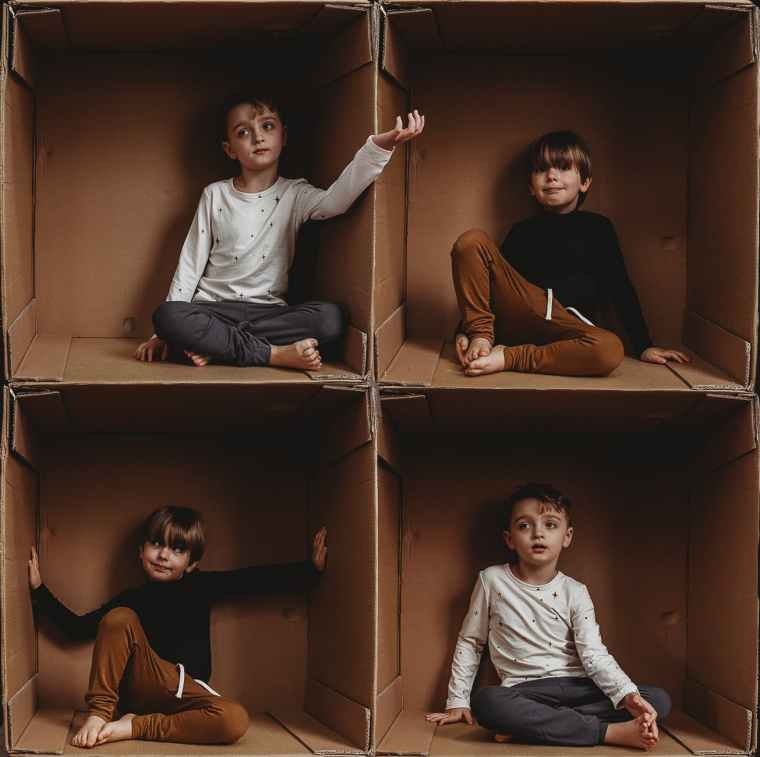
These couple of examples are meant to make you consider different reactions of different people as normal, if not right. Categorizing people is not completely wrong, our brain does it every day anyway: “Jan the manager, Susie the cleaner, Jake the engineer”; that’s a “boxing” system too. So what I’m saying is that it’s ok to try to find people’s fit, however, think carefully before you do it, these examples are only of a “letter” at a time, and while you may understand Introversion, iNtuitive and Thinking separately, you may still not completely know an INTP as a whole; the sooner you put the 4 types together, the more possible variations you get and the harder is it to label someone.
The key learning is that your style is as good as any other style as long as you keep learning and continue to improve your work environment to make it a better place for yourself, your colleagues or employees. I cannot stress more that this is not an excuse generator: “I’m a Perceiver, you know I’m always bad with deadline”; this is a power generator: “I’m a Perceiver, I’m adaptive and resourceful, so I’ll do my best to meet the deadlines from now on”.
*When you find your own 4 letter code, remember, these can change as they are preferences, and the options on this article are mainly work related hence will not fully describe your type in personal relationships.




 As Simple As That - HR and Leadership Coaching