
The mistake is thinking that there can be an antidote to the uncertainty
David Levithan
Many people make new year’s resolutions. A recent study shows that more than 50% of adults makes resolutions, but fewer than 10% keep them for more than a few months.
It’s been a long time of uncertainty but it’s definitely time to embrace it; for those of us who love control and certainty this may affect our resolutions and goals even more.
What do we need to know about uncertainty?

Firstly….It’s absolutely natural and normal to dislike uncertainty because throughout our development we learnt from different sources and situations that uncertainty is the gate to potential dangers – you can’t control what you don’t know, you can’t keep safe of what you don’t see, you can’t make a plan if when you don’t know all the details, you can’t set a goal without ‘knowing things’. Uncertainty seems to be one of the greatest reason for fight or flight and it sends us straight to our default programming.
Secondly, you absolutely must learn how to become friends with uncertainty, how to keep plans and goals going and embrace the unknown. The faster you become comfortable with uncertainty, the easier it gets to become more adaptable and more flexible when following a plan or when taking actions.
The only way to avoid uncertainty is to do nothing.
When you give in to uncertainty, you stop growing. Think about how unfair that is towards yourself: you’d stop growing and living because you’re afraid of the uncertainty, unknown and unfamiliar. That can’t be right.
You were born to explore the unfamiliar.
As a child, the only thing you’ve done was to become friends with the unfamiliar. A child will never say: “I’ll only walk 1 step because I can’t see the end of the floor”, or “That puddle is cold and muddy, I’ll try it later” – no. Children explore tirelessly, until they are taught by their parents, families and later on society how to ‘be’, what is ‘ok’ to do and what is not. Uncertainty however, has the power to make you question yourself. Questioning yourself leads you to push your limits, try new things and identify new opportunities. No new ideas ever came from “I’m afraid to try this”, “not now”, “I’ll do it later”.
To make sure you achieve your goals, set an intention to focus on your goals regardless of the uncertainty you’re going through, regardless of what’s going on outside of your control.
According to Brian Tracy, fewer than 3% of the people have clear, written goals and a plan of getting there.
How to stay focus on your goals in times of uncertainty?

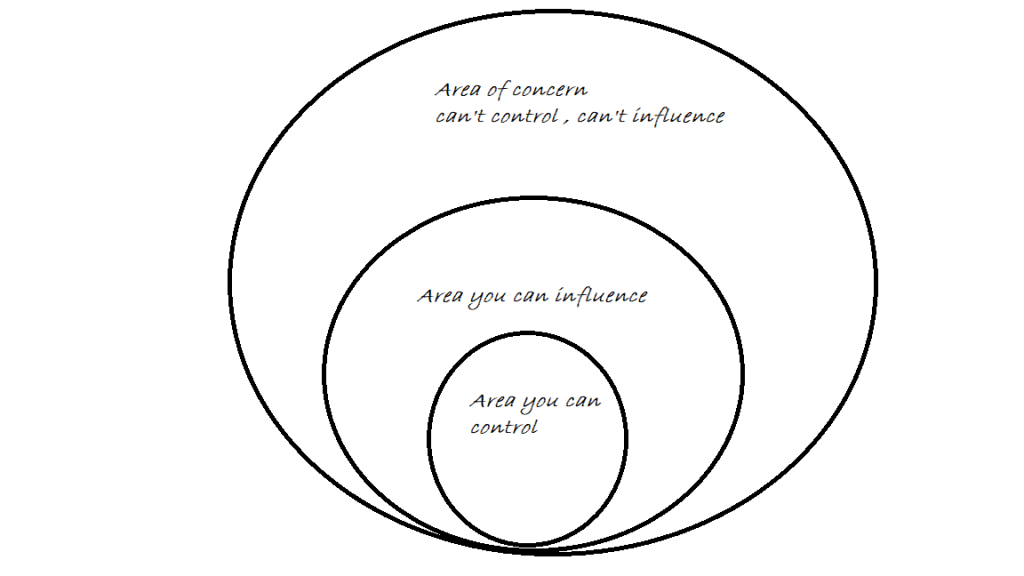
- Focus on what you can control.
When setting goals in uncertain times, it’s important to focus on what you can control – your thoughts, your reactions and your action – and by doing so, you’ll worry less about the things you can’t control and what might or might not happen.
- Think your goals in 3P
- Positive – Goals are more likely to be achieved when they are phrased in a positive way. Who would be energised by a goal that sounds like: Find a job that’s not boring
- Personal – Make the goals reflect your passions, your values or your interests. Whenever you write down your goals, start with “I”, that will make them personal and you will be motivated to achieve them.
- Possible – this takes us back to ‘focus on what you can control’: earning $20k in 6 months from your handicraft business may be possible, but if you charge $10 a piece and you only make 3 per weekend, then … that’s not going to support your goal very much.
- Prioritise your goals.
The year just started and you may feel more excited than usual to start many projects, work on more goals at once and that’s wonderful. However, it is very important to create a priority list when working on your goals, not all of them can have the same priority because you’ll feel overwhelmed, your focus will decrease, you’ll be tired in no time and you’ll quit before you’ve even started. And that’s not the purpose of setting goals, is it?
If you want to be happy, set a goal that commands your thoughts, liberates your energy and inspires your hopes.
Andrew Carnagie


 As Simple As That - HR and Leadership Coaching