
There are many leadership styles: democratic, authoritative, coaching, visionary, lessez faire -which comes from French – and literally means let it make (or non-literally and which makes more sense – let it be) – and so many more. And if you don’t know which one fits you, I’m sure that you can find many online questionnaires and quizzes to find out in 15 minutes or less which style is yours.
But, I want to talk about two other types of leaders: the formal and informal leaders.

A Formal Leader is someone who has a title, someone who has been appointed as a leader: in politics, organisations, groups , communities and even families.
An Informal Leader is someone who is naturally followed by people because of their attitude, because of their power to influence or because they represent a model for those who follow them.
Use the following thinking model to become an informal leader at home, at work or in community. This model of thinking will significantly improve your mindset and will empower you on a daily basis.
This model we often use in coaching, is called above the line – below the line thinking.
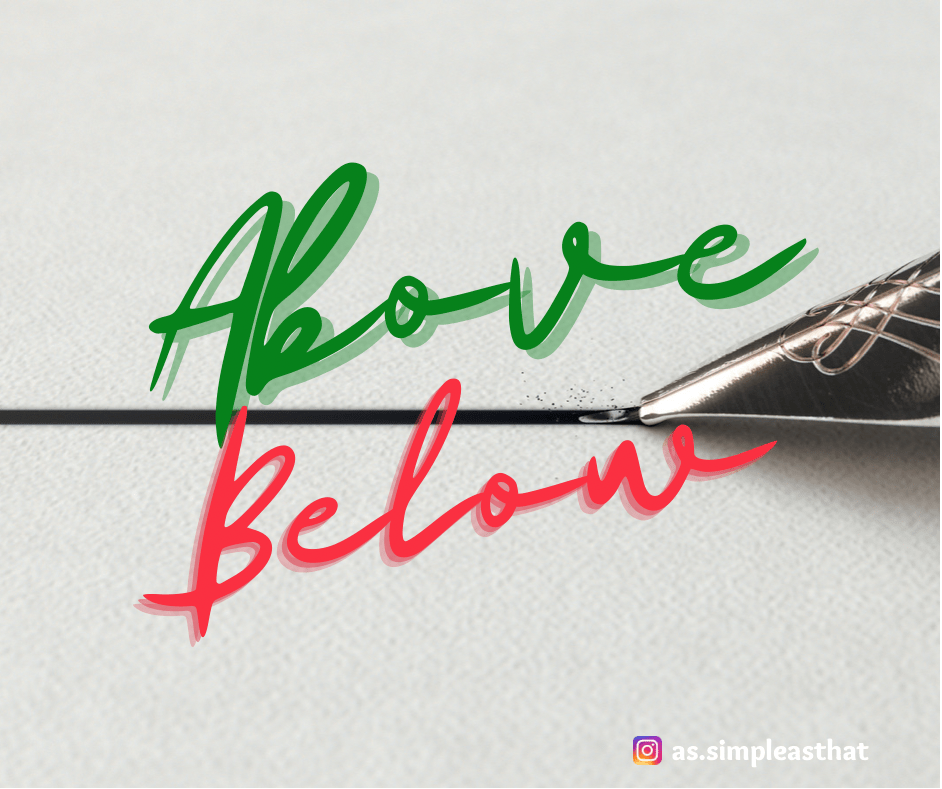
For the sake of the exercise, lets draw a horizontal line – just like in this picture. Spoiler alert! To be a functional human being you must always try to stay above the line.
You may have heard of this thinking model , it’s often referred to as victims vs victors, or fixed vs growth mindset, but no matter how you call it, it’s still going to be easier to see it as above the line, below the line.
What does this model do for us?
It allows us to become solution oriented, rather than problem driven, it allows to deliver outcomes, results and detangle the wires that keep us stuck.
No problem can be solved by the same level of consciousness that create it
Albert Einstein
What this quote actually says is that we cannot solve a problem with the same thinking that created it.
Let’s see what below the line thinking looks like:

Below the line we have: blame, excuses, justification, denial, avoidance, that victim mentality – where it’s not our fault, or someone else must come to rescue, there is always a problem band almost never a solution.
See this below the line thinking example when receiving feedback:
“Alex I think you could’ve been softer with that customer, although he was rude, he was right, we absolutely done wrong by him.” A reply with below line thinking would sound like this: yes, but!( whatever comes after “BUT” is useless, just as if you would take a sponge and erased it) yes, but, he was yelling or << insert any excuse >>
With answers like this, we do not allow ourselves to grow and to learn. We do not create choices, we do not look for resources instead we choose, consciously or unconsciously to stay the same and as a result of holding on to this thinking we experience overwhelm, stress and even anxiety and depression. It doesn’t mean we can immediately change it, we sometimes come up with defensive answers, excuses and blame because we are not aware that we blame and make excuses – plus! nobody likes to be criticised and corrected.
Above the line we have the opposite: we have responsibility, accountability, ownership, solutions, choices – no excuses, no blame.

This is where a functional adult sits. Above the line is where we consciously choose what is happening, we are in control of our thinking, of our actions and responses – when we reach here life happens for us – not to us – just like Tony Robbins says.
This is where the victors are.
The easiest way to step above the line is to make a decision to stay open, curious and grateful.
An above the line example for the above feedback, would be: I appreciate you bringing this up, I will definitely use my empathy next time, after all, I understand very well what he was going through”.
Is this something easy to do? Absolutely NOT.
We all have different backgrounds and environments and sometimes we learn that it’s ok to make an excuse – “they will understand” – oh sorry I’m late, the traffic was terrible . Sure.
You know what? Nobody cares! You can use millions of excuse and live in blame and justification as much as you want; people move on, the world moves on. The only one who will have something to lose is you! Why? Because you let go of your power to something that is outside of you, you allow traffic be more powerful than your own will to leave the house a bit earlier and make it on time. And if you let go of your power one excuse at the time, what are you left with?
This thinking model is one of the first things that will make you an informal leader. To become an informal leader is rewarding because other people see an example in you, they see someone who they want to model – a formal leader, on the other hand it chosen by a title, their power disappears as soon as that title changes.
Who do you want to be? Where do you want to sit… below the line or above the line?
 As Simple As That - HR and Leadership Coaching